What actually works on the ground (and what doesn’t)
If you ask most farmers how their layout came together, the honest answer is: “It just happened over time.” A shed was added when needed. Parking expanded when more people showed up. A path formed because people kept walking that way.
There’s nothing wrong with that but at some point, the layout starts creating problems:
Vehicles and visitors crossing paths
Not enough space during peak days
Work areas constantly interrupted
No clear place for future expansion
Understanding Farm Layout Types
Before planning a farm, it is helpful to understand the different ways a site can be organized. Each layout type offers unique advantages depending on the farm’s purpose, scale, and context.
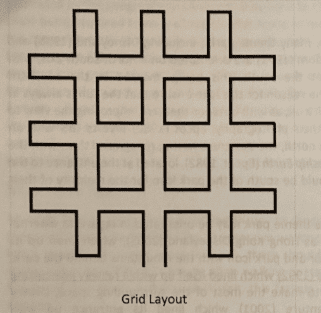
Grid Layout
A structured system with intersecting paths, often used for organizing crops or large parcels. This is your classic straight-line setup. Rows and paths intersect cleanly, and everything feels organized. For agritourism purpose, this actually works really well especially if people are walking around on their own. They don’t have to think too much about where to go next. It’s perfect for things like fruit picking or flower farms. Visitors can just wander row by row without getting confused. Where it can fall a bit flat is the experience. It can feel a little too “agricultural” and not very cozy. You’ll want to break that up, maybe add shaded seating, little rest stops, or signage that makes each section feel a bit different
Best for: Production-focused farms
Strength: Efficiency and clarity
Limitation: Can feel rigid and less engaging for visitors

Midway (Linear) Layout
Think of this as a central path that everything branches off from. Visitors enter, and there’s a clear direction pulling them forward.
This works nicely if you want to guide people through a specific experience like starting at a café or shop, then moving toward fields, animals, or activity zones.
It’s great for storytelling because you can control what they see first, next, and last.The only real issue is crowding. If everyone is using that same path, it can get busy. So it helps to have little side paths or open areas where people can step away and explore without blocking the flow.
Best for: Visitor-oriented farms such as cideries or farm markets
Strength: Simple, guided movement
Limitation: Risk of congestion and limited expansion flexibility.
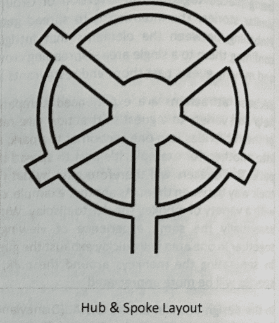
Hub & Spoke Layout
This layout feels very natural for agritourism. You’ve got a central hub (usually where people arrive), and from there they branch out to different parts of the farm.
That hub becomes your anchor ticketing, food, seating, restrooms, maybe a shop. People come back to it again and again during their visit.
It’s especially useful for families or groups because it gives them a clear meeting point.
The only thing to watch is distance. If your spokes are long, some areas might feel “too far,” especially on hot days. A bit of shade, benches, or even a small transport option can make a big difference.
Best for: Farms with multiple attractions or zones
Strength: Strong orientation and social focus
Limitation: Overcrowding at the center
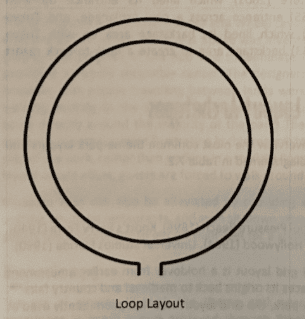
Loop Layout
This one’s great if you want people to just… follow the path and enjoy the ride.
A loop naturally guides visitors through the entire farm without them needing a map. There’s no awkward “did we miss something?” feeling.
It works really well if you’re trying to create a sequence like seeing crops, then animals, then ending at a farm shop or café.
The trick is keeping it interesting all the way through. If parts of the loop feel empty or repetitive, people will rush through them. Adding small stops photo spots, viewpoints, or interactive bits keeps the energy up.
Best for: Walking experiences and tours
Strength: Smooth circulation without backtracking
Limitation: Limited entry/exit flexibility

Organic Layout
This is the opposite of a grid. Instead of forcing straight lines, you follow the land curves, slopes, existing trees, all of it.
For visitors, this feels more like exploring than touring. It’s quieter, more immersive, and works really well if your farm leans toward sustainability or nature-based experiences.
It’s the kind of place where people slow down, not rush through.
But yeah, it can get confusing. Without clear paths or subtle guidance, people might miss things or feel unsure where to go. Simple signage or even just well-worn paths can help without ruining the natural feel.
Best for: Landscape-driven farms
Strength: Natural and immersive experience
Limitation: Can be confusing without clear wayfinding

Hybrid Layout
In reality, most agritourism farms don’t stick to just one layout they mix things.Where You might have:
-A structured area for crops
-A central hub for visitors
-A loop path for easy walking
-And a few organic sections for a more relaxed vibe
This approach gives you flexibility. You can keep operations efficient while still making the place enjoyable to visit.The only thing that matters here is connection making sure everything feels like part of the same place, not random pieces stitched together. In practice, most successful farms adopt a hybrid approach combining structured efficiency with experiential design.
Best for: Most modern farms with mixed uses
Strength: Flexibility and adaptability
Limitation: Requires careful planning to avoid disorder
Implementing an Effective Farm Layout
Once a layout strategy is selected, the next step is translating it into a functional site plan.
1. Define Clear Zones
Divide the farm into:
Public areas (parking, retail, visitor spaces)
Operational areas (processing, storage, service access)
Private areas (residences)
This ensures safety, privacy, and efficiency.
2. Plan for Growth
Avoid designing only for current needs. Farms evolve over time.
Leave space for:
Additional structures
Expanded parking
Future amenities
3. Design Efficient Circulation
Good flow is critical.
Separate pedestrian and vehicle movement where possible
Avoid crossing traffic patterns
Create intuitive pathways
4. Balance Visibility and Function
Back-of-house areas should be accessible but not intrusive. Poor placement can disrupt both operations and visitor experience.
5. Create Pause Spaces
Include areas where people can rest and gather:
Seating zones
Shaded areas
Small social spaces
These improve comfort and reduce congestion.
6. Provide Essential Amenities
Do not underestimate:
Washrooms
Shade
Drinking water
Rest areas
These directly impact user satisfaction.
7. Ensure Emergency Access
Plan for fire and service vehicles:
Clear access routes
Adequate turning radii
- Unobstructed paths
Common Pitfalls in Farm Layout Planning
Even well-intentioned designs can fail if these common mistakes are overlooked:
Not leaving enough space for future growth
Over designing and overcrowding the site
Crossing traffic patterns
Poor separation (or over-separation) of back-of-house areas
Lack of privacy for residential spaces
Missing pause spaces and rest areas
Inefficient public or operational flow
Insufficient washrooms and amenities
Lack of shade and comfort features
Inadequate emergency access
An effective farm layout is a balance between functionality, flexibility, and user experience. By understanding different layout types and applying thoughtful planning principles, farms can operate efficiently while also creating meaningful and enjoyable spaces.Most importantly, avoiding common pitfalls early in the design process helps ensure long-term success both operationally and experientially.